Stop sensitive data before it leaves
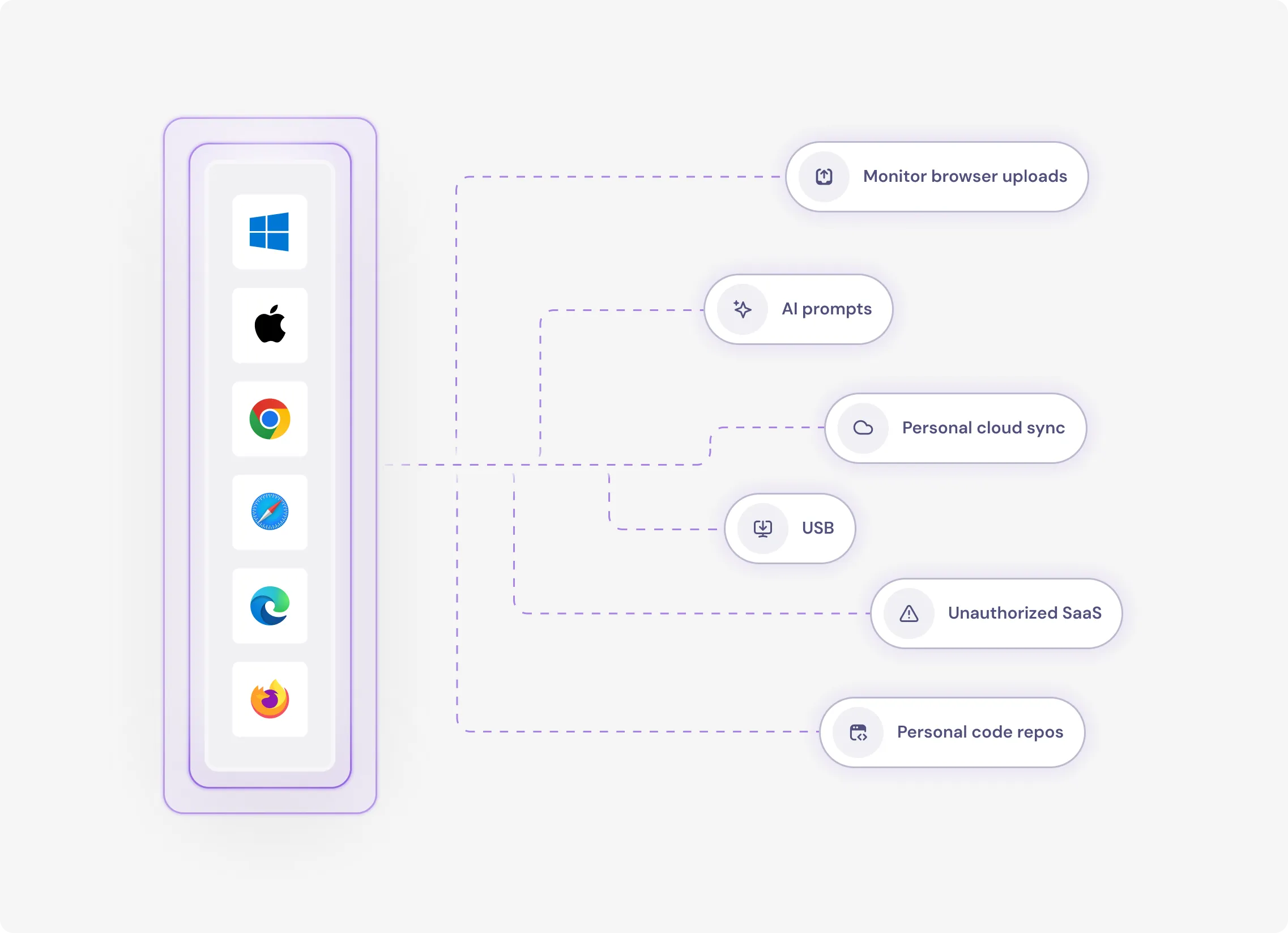
Browser uploads, AI prompts, personal cloud sync, USB, email, unauthorized SaaS. Nightfall traces data flows, blocks risky actions, coaches employees in real time, and now investigates the people behind the patterns, without owning the device.
User Risk Agents investigate the people behind the patterns and deliver a written case. See how →

Endpoint DLP and insider-risk tools fail in the modern workplace
Built for a different era, legacy endpoint DLP and IRM tools inundate SecOps with false positives, leave coverage gaps, frustrate employees, and are a nightmare to maintain.
Blind to AI apps
Legacy DLP can’t see what employees paste into ChatGPT or upload to generative AI platforms, the fastest-growing exfiltration channel.
Incomplete evidence
Investigations mean piecing together partial logs. No session replay, no file preview, no lineage back to the document’s origin, and no view of the user over time.
Noise, not signal
80–95% of alerts go nowhere. Security teams burn limited hours on legitimate work flagged as exfiltration, while the real pattern hides in the queue.
“Nightfall gently redirects our people to the safe gen AI sites and blocks attempts to put PII or customer data into ChatGPT.”
Every channel. Every action. Full context.
Lightweight agents and browser plugins monitor every vector, block risky behavior in real time, and capture complete evidence. Then User Risk Agents read the pattern across people, not just events.

Coverage across every exfiltration vector
- Captures prompts, copy/paste, and file uploads into AI tools
- Context-aware AI classification of customer records, financials, source code, and confidential documents
- Detects obfuscated content, images, and screenshots that pattern-matching DLP misses
> sensor host=mbp-2291 channel=usb_write file=customers_all.zip class=[pii:18400] lineage=salesforce.com→download→rename→zip
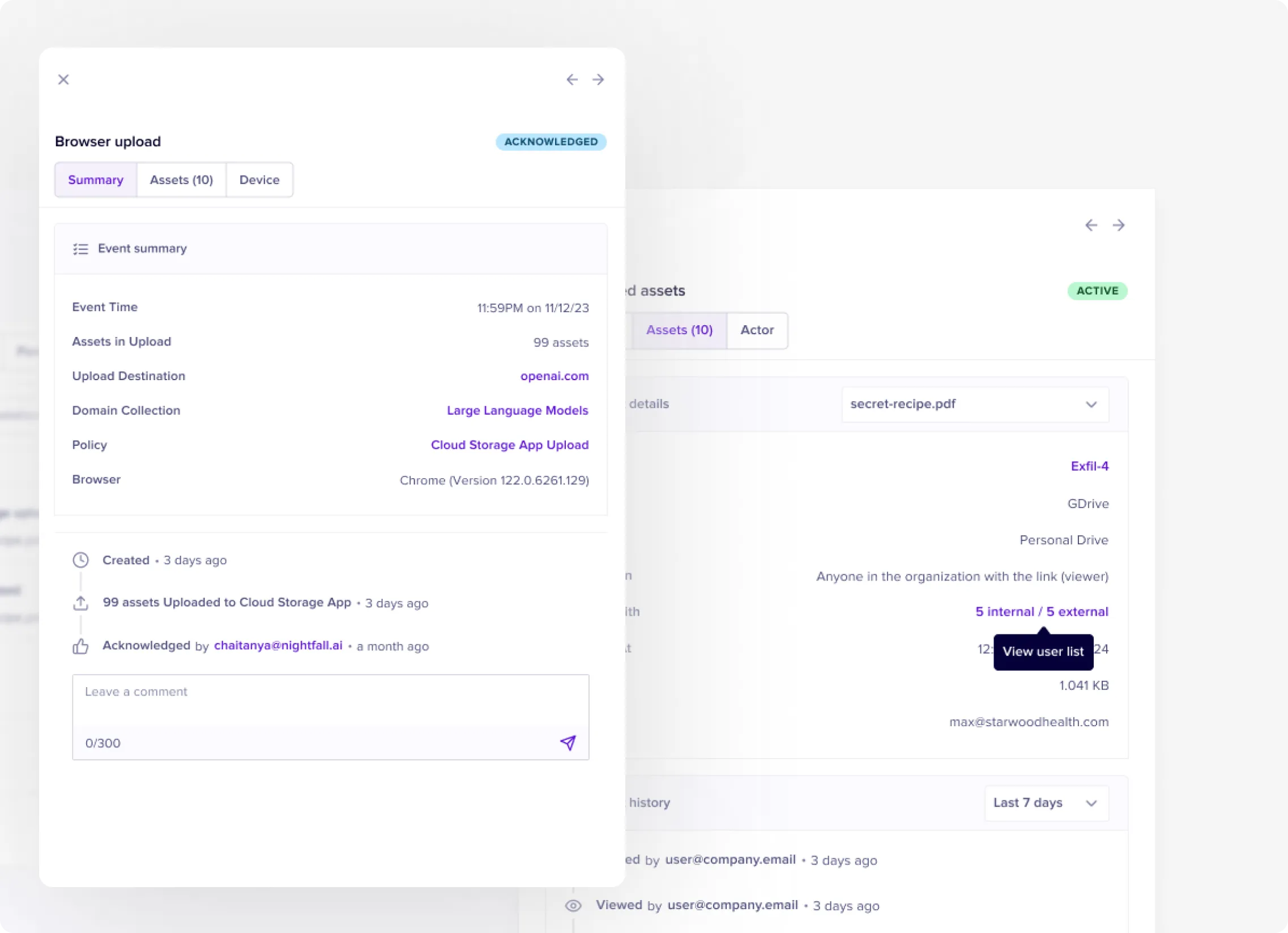
Forensic session replay and AI-powered data lineage
- Screen recordings for compliance reviews and insider investigations
- Lineage across download, rename, compress, and exfiltration
- File preview reveals the exposed content itself
> replay session=s-88f1 clips=3 duration=4m12s preview=customers_all.csv rows=18,400
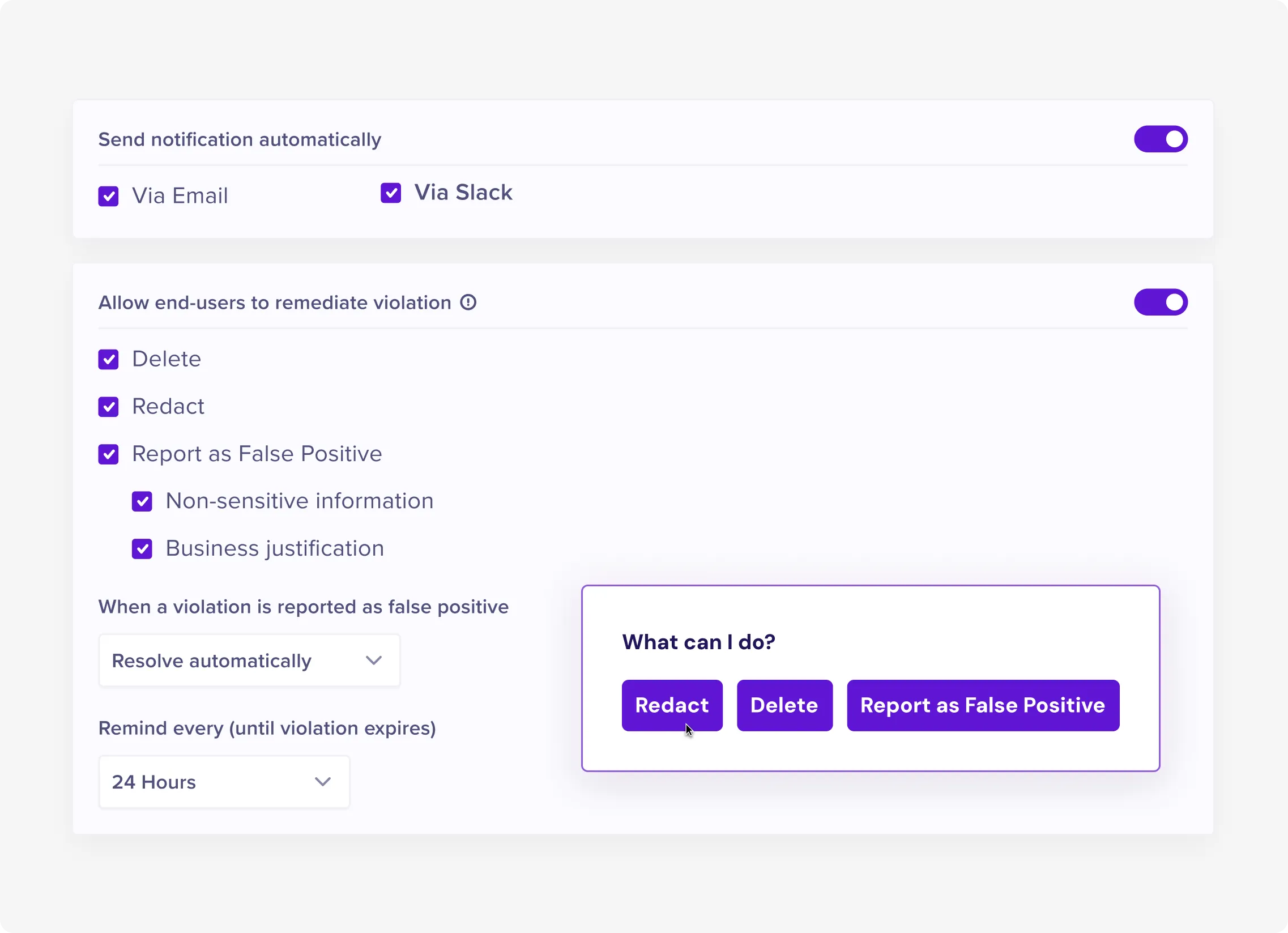
Real-time block, redact, or coach
- In-browser coaching: “Use ChatGPT Enterprise for corporate data”
- Specialized protection for code repositories, secrets, and development artifacts
- Block the action, redact the sensitive fields, or redirect to the approved path
> enforce channel=chatgpt.com user=m.chen action=REDACT coach="Use ChatGPT Enterprise for corporate data" acknowledged=true
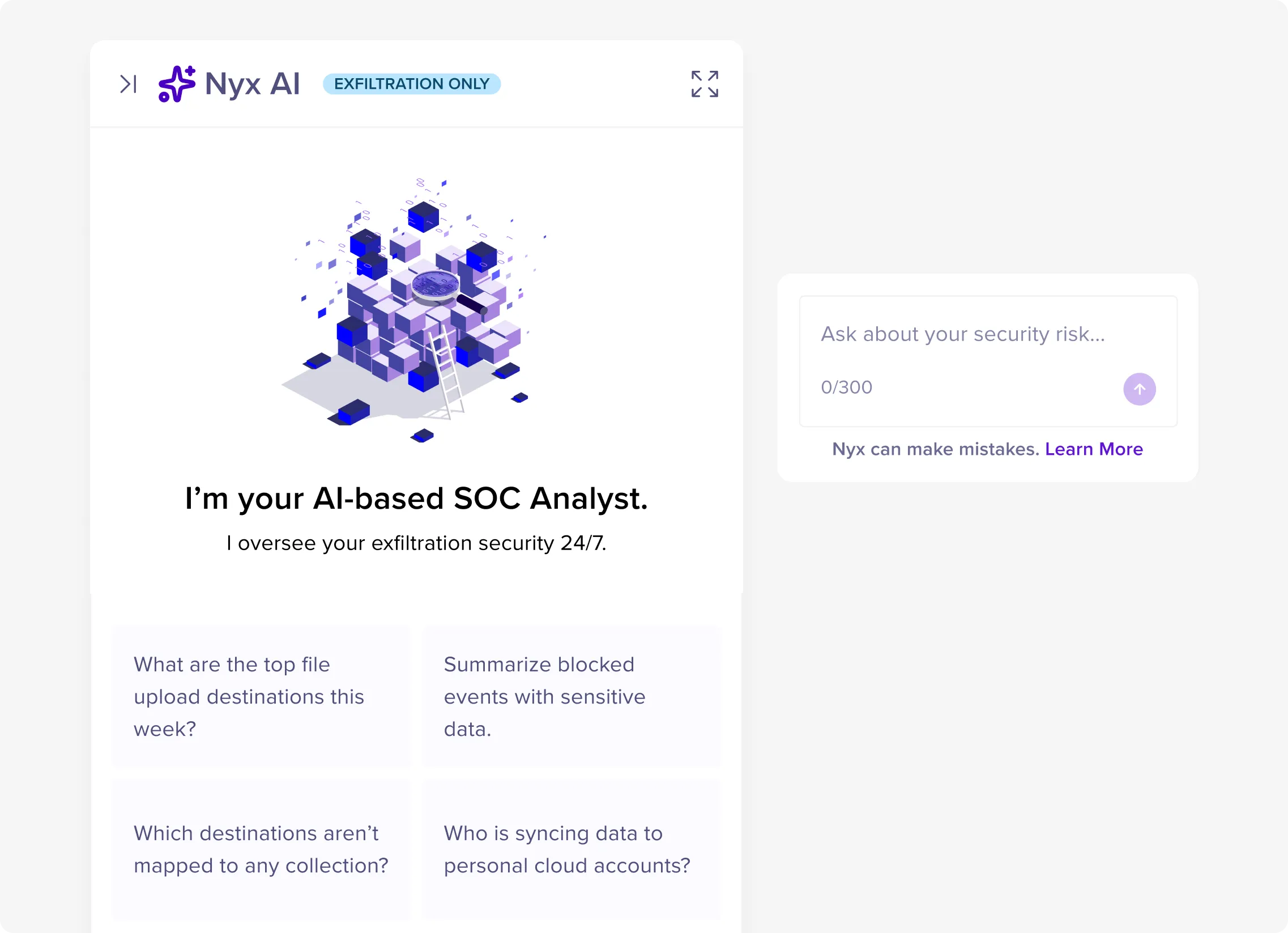
Nyx investigates, tunes, and reports
- Ask in natural language, get summaries and recommendations
- Visibility on day one with no policies written
- Pre-trained detectors for secrets, source code, and customer PII
> nyx q="who moved customer data off-network this week?" events=48,211 answer=1 user outside baseline case=drafted
User Risk Agents surface the person behind the pattern
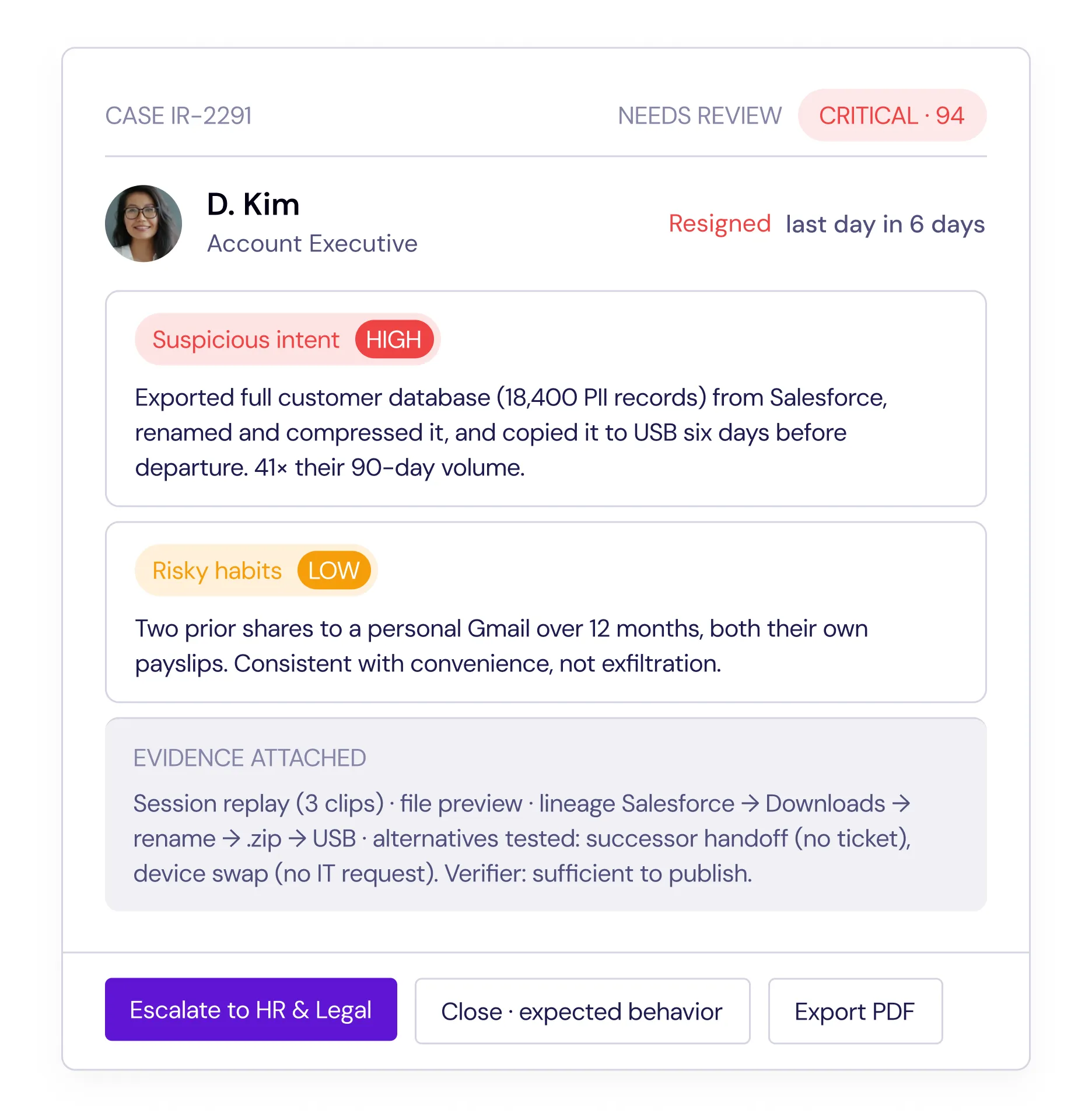
- Suspicious intent rated separately from risky habits
- Whose data, which destination, unusual for whom: the details that change the conclusion
- Escalate or resolve from the case; routed to Email, Slack, Teams, Jira, SIEM/SOAR; nothing sent to the employee
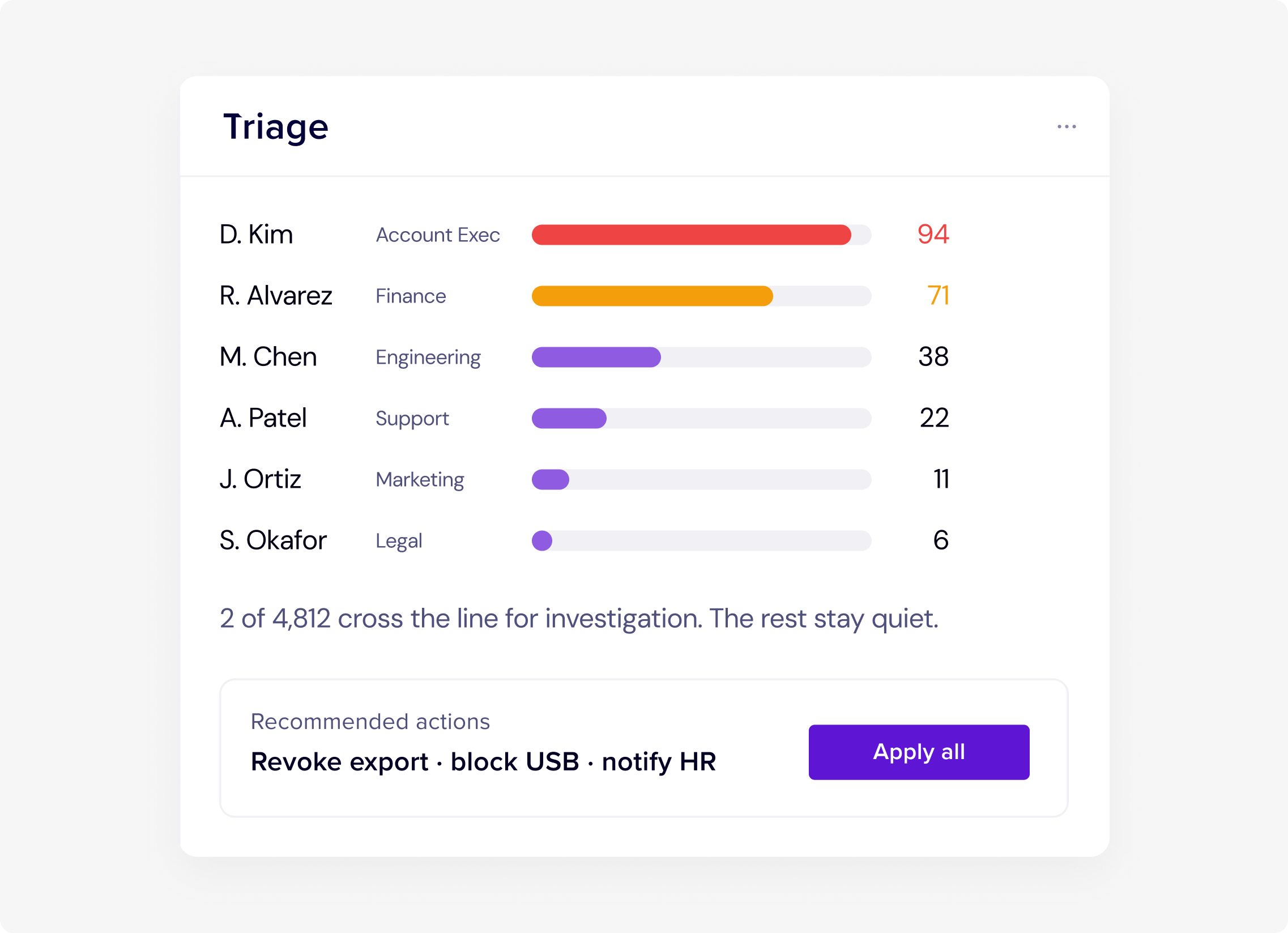
> ura triage=4,812 users critical=2 investigate=d.kim verifier=PASS case=IR-2291 routed=[slack#secops, jira]
Blocking the file is step one. Knowing the person is the answer.
User Risk Agents connect employee activity, sensitive content, and identity over time. A Triage agent scores every user against their own history and company norms. An Investigator reconstructs the timeline, inspects content, and tests alternative explanations. An evidence verifier challenges weak findings before anything is published.
The output is a written case: what happened, why it matters, what to do next, with suspicious intent rated separately from risky habits. Nothing is sent to the employee.
Scores every user
Rebuilds the timeline
Challenges weak findings
- Slack
- Teams
- Jira
- SIEM / SOAR
- PDF export
From alert to verdict in milliseconds. From events to a case in hours.
Five steps from a fresh tenant to a written insider-risk case, with no network changes and no device ownership along the way.
Deploy lightweight sensors
Push agents and browser plugins via MDM or Chrome Enterprise. Connect SaaS apps through native APIs. Live across your fleet in under a day.
- Mac and Windows agents: USB, clipboard, desktop apps, local file movement
- Browser plugin: Chrome, Firefox, Safari, Edge; prompts, pastes, uploads
- 12+ native SaaS APIs: Slack, Google Workspace, M365, Salesforce, GitHub, Jira, Confluence, Notion, Zendesk
- Gmail and Exchange Online natively; no proxy, no certificates, no network re-architecture
Classify in real time
AI-powered detection on every upload, paste, sync, and send, with lineage attached from the first event.
- Pre-trained LLM and computer vision models: PII, PHI, PCI, secrets, source code, confidential documents
- Semantic detection catches meaning, not just patterns; obfuscated text, images, and screenshots included
- Lineage recorded across download, rename, compress, and transfer
- Visibility on day one, before a single policy is written
Block or coach
Stop the action, redact the sensitive fields, or redirect the employee to the approved path. Choose the response per policy.
- Monitor: visibility only, no user interaction
- Coach: contextual notification on endpoint, Slack, Teams, or email; the action proceeds
- Block or redact: the sensitive content never leaves
- Self-remediation lets employees fix a violation themselves
Investigate with full context
Session replay, file preview, and lineage. The whole story, not just a flag. Nyx answers questions in natural language and drafts the summary.
- Screen recordings for compliance reviews and insider investigations
- File preview reveals the exposed content itself
- Origin-to-destination lineage across SaaS, endpoint, email, and browser
- Nyx: ask what happened, get the timeline, evidence, and recommended next step
Surface the user, not just the event
User Risk Agents score, investigate, and verify. A written case lands in your queue with a clear call on suspicious intent vs. risky habit.
- Triage scores every employee against their own history and company norms
- Investigator reconstructs the timeline, inspects content, tests alternative explanations
- Evidence verifier challenges weak findings before publication
- Case workflow: escalate to HR, legal, or the SOC, or close; PDF export; routed to Email, Slack, Teams, Jira, SIEM/SOAR; nothing sent to the employee
What teams report after switching
Organizations that move from legacy endpoint DLP and IRM to Nightfall consistently see the same four outcomes.
Deploy across your entire ecosystem in under a day, versus 6+ months with legacy alternatives.
Reduction in false positives. Stop spending your team’s limited hours on alerts that go nowhere.
Visibility across exfiltration channels. Close the gaps between point solutions where your data was escaping.
Evidence-ready reporting and exportable cases streamline SOC 2, PCI DSS, and HIPAA audits.

See where your data goes. Then stop it.
Tell us a little about yourself and we’ll connect you with a Nightfall expert who can share more about the product and answer any questions you have.
- A 30-minute call
- Tailored to your stack